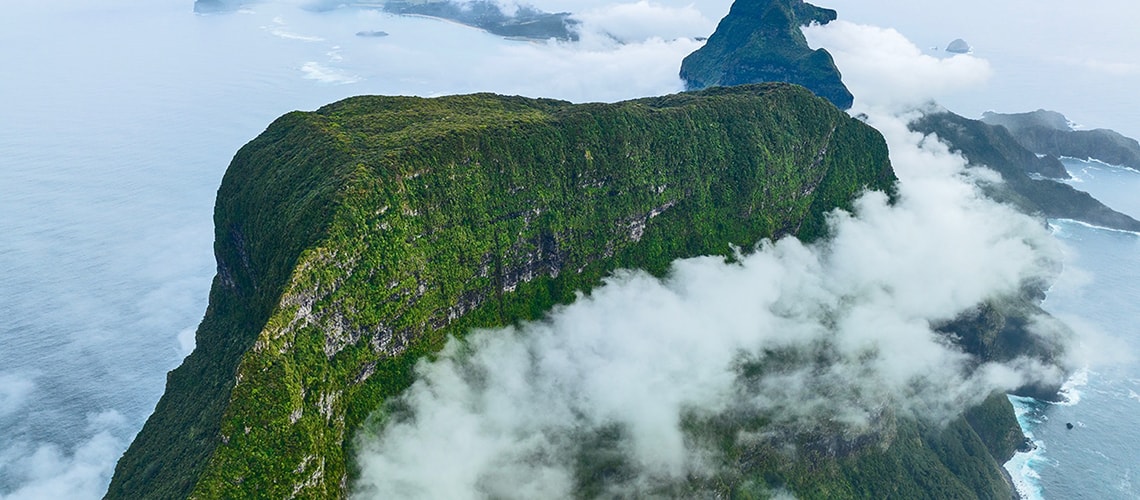

The Lord Howe Island Board has installed a new climate monitoring system on the summit of Mount Gower, giving scientists and the community real-time insight into one of the island’s most fragile environments.
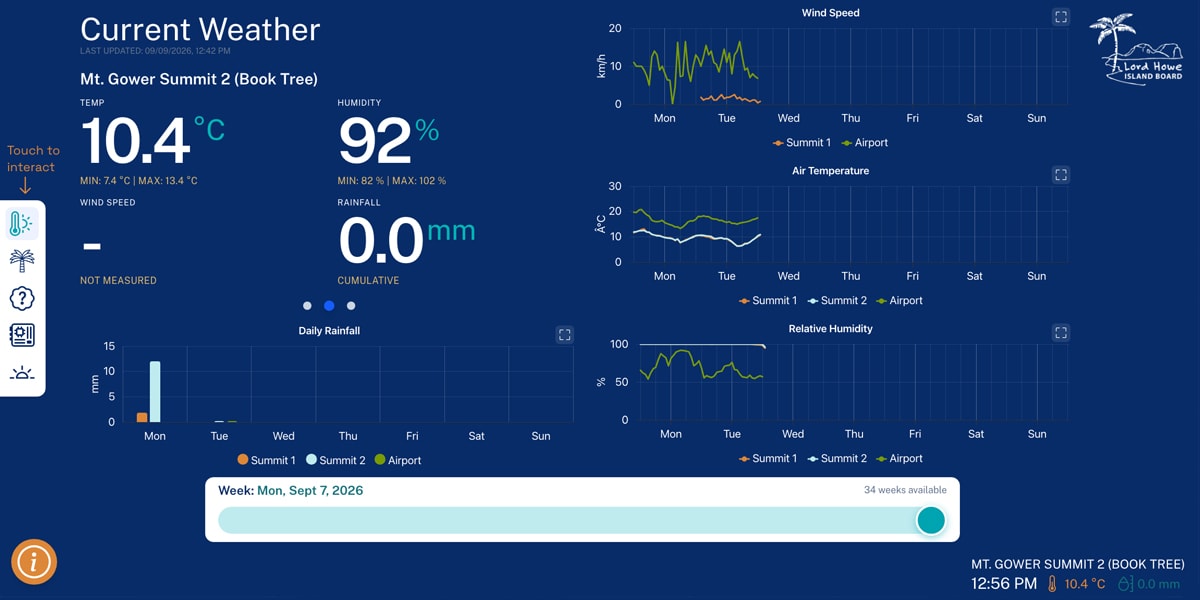
The system uses LoRaWAN (Long Range Wide Area Network) radio technology, with a network of climate sensors designed to gather data at different elevations across the summit. LoRaWAN connects low-power, battery-operated devices to the internet over long distances, sending small amounts of data while using minimal battery — technology that is essential on an island with limited telecommunications connectivity.
What the sensors are measuring
The sensors on the summit of Mount Gower are currently collecting data on:
- rainfall
- relative humidity
- temperature
- light
- wind
- soil moisture and soil temperature
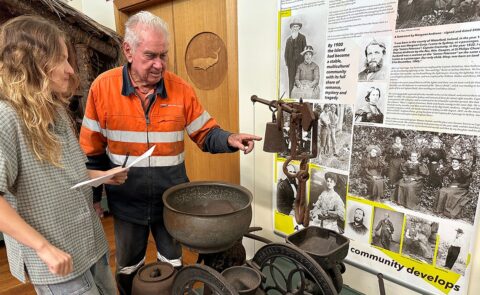
The sensors are networked through a dashboard that gives remote access to real-time climate data. An interactive dashboard screen at the Lord Howe Island Museum displays these readouts for visitors to explore.
You can also view the data yourself online at the dashboard:
https://indicium-dynamics.github.io/LHI-Weather/
Science on the summit: saving the Little Mountain Palm
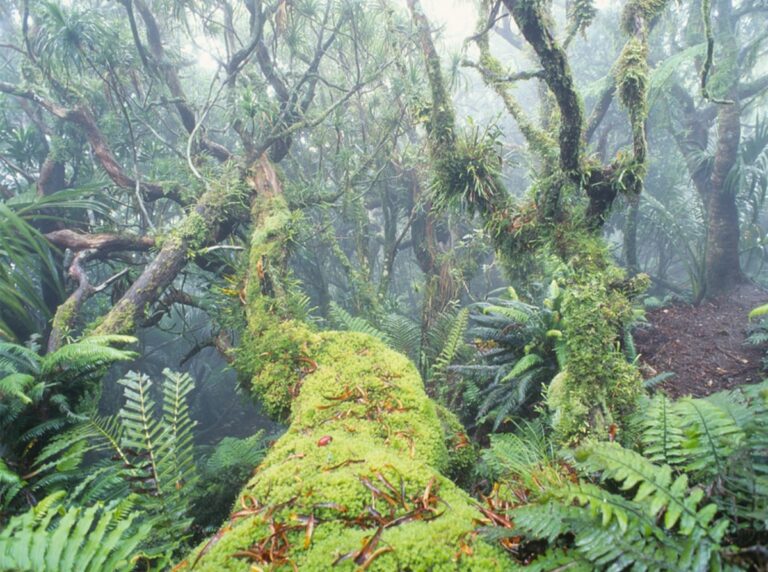
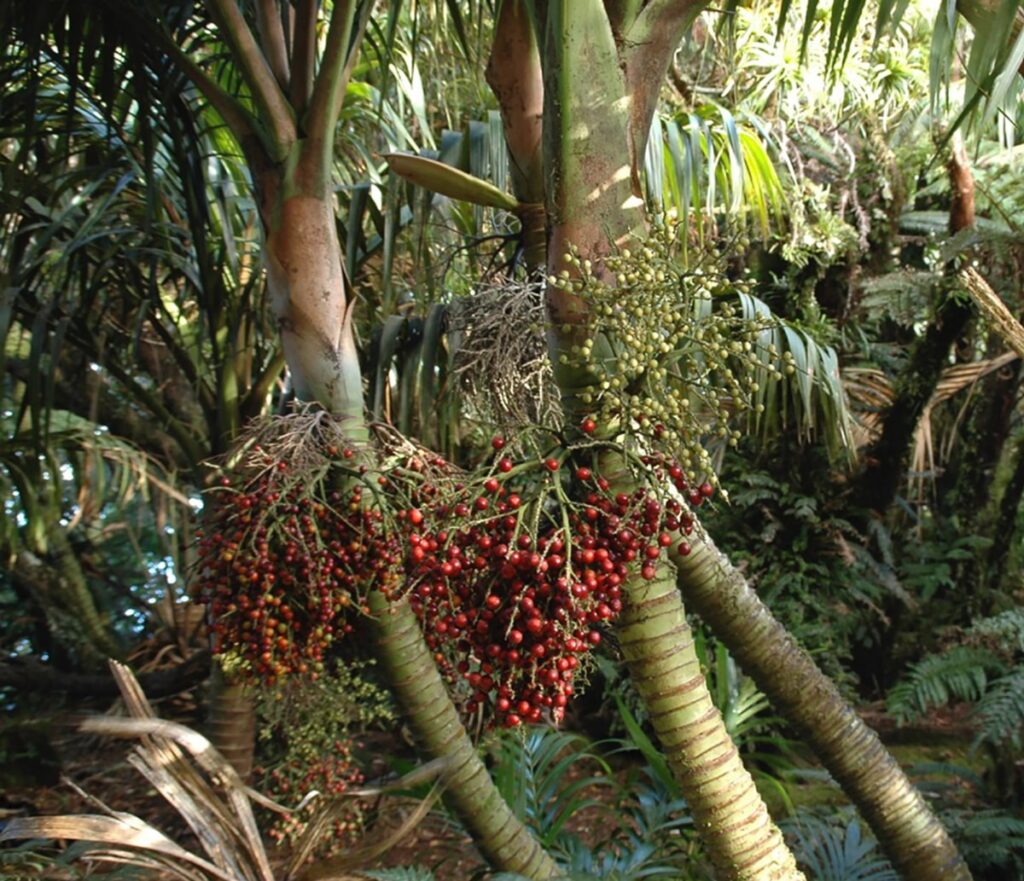
The Little Mountain Palm (Lepidorrhachis mooreana) is endemic to Lord Howe Island and found only on top of Mount Gower, at elevations of 700 metres and above. It is critically endangered and lives in the Gnarled Mossy Cloud Forest — one of only a handful of island montane cloud forests in the world.
These ecosystems are like islands in the sky, depending on consistent cloud cover to create the high-humidity environment their plants need to survive.
The Gnarled Mossy Cloud Forest is under threat from climate change, which is pushing cloud cover to higher elevations. This reduces the humidity and moisture that the Little Mountain Palm and many other plants rely upon.
Current climate modelling does not fully account for the variations in micro-climate that occur in oceanic cloud forests, making it difficult to accurately assess how the Little Mountain Palm and other species in the Gnarled Mossy Cloud Forest are likely to respond to climate change. More data is needed to identify micro-climate trends and establish baseline data — essential information for guiding the future conservation management of the Little Mountain Palm.
Little Mountain Palm climate data
Previous research has found that successful germination of the Little Mountain Palm seed is strongly linked to soil moisture, soil temperature and light levels.
The soil and light sensors on Mount Gower are collecting real-time data at different elevations, and at sites both under the tree canopy and in canopy gaps. This data shows how changes in temperature and moisture are experienced by the Little Mountain Palm, giving researchers a better understanding of the conditions the species prefers.
Explore the data yourself on the dashboard: https://indicium-dynamics.github.io/LHI-Weather/
About the weather data
Mount Gower weather data is provided by the Lord Howe Island Board LoRaWAN Climate Sensor network, and airport data is provided by the Bureau of Meteorology.
Development and funding
This application was developed by Indicium Dynamics to provide real-time weather monitoring and analysis.
This project is jointly funded by the Australian Government’s Saving Native Species program and the Natural Heritage Trust. It is delivered in partnership with Local Land Services, a member of the Commonwealth Regional Delivery Partners panel.