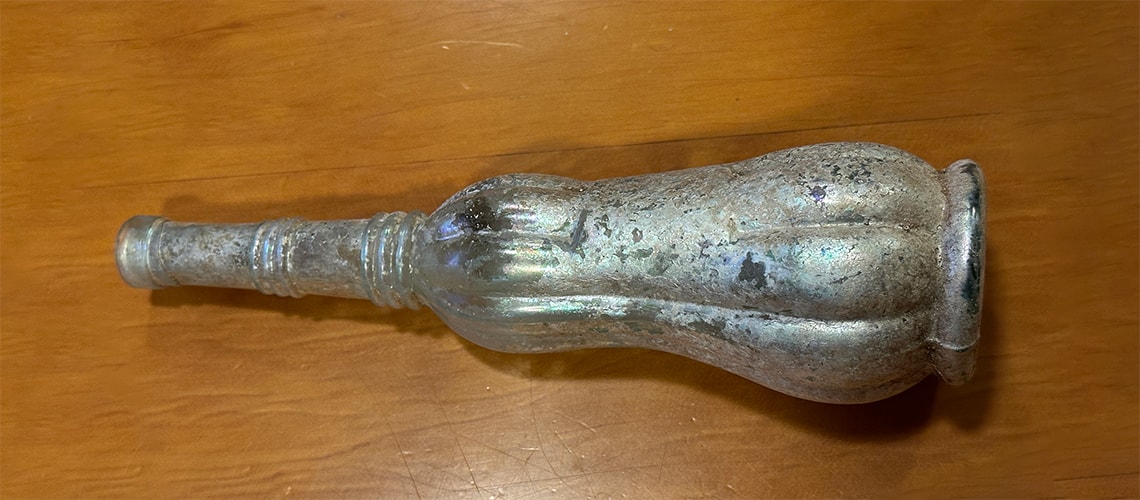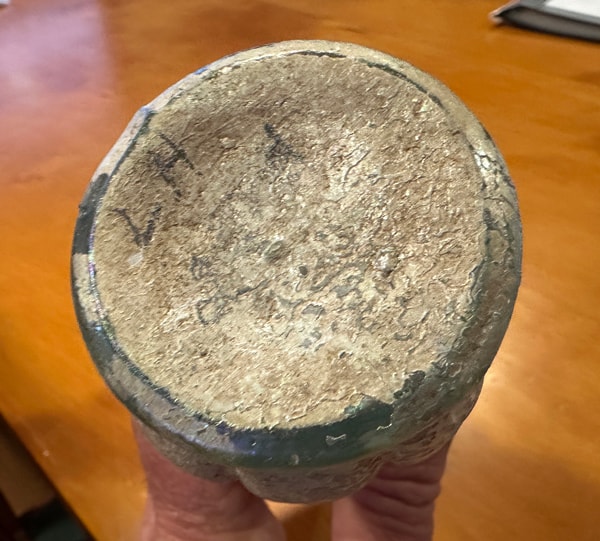

During the May Friends of Lord Howe Island Ecotour, the group was at North Bay when Ian Sinclair saw the neck of a bottle sticking out of the eroding dune. It was recovered, and a bit of detective work has revealed its possible origin.
The body has a bulbous, melon/panelled ribbed shape tapering into a long thin neck with a set of raised rings partway up, finished with a simple rolled/flared lip, and a pushed-up base.
That specific silhouette — bulb body, sharp shoulder taper, ringed neck, rolled lip — is a classic profile for Middle Eastern/Ottoman rosewater or attar sprinkler bottles (sometimes called gulabpash or qumqum), made specifically for their decorative, table-use purpose rather than storage or trade utility; made across Syrian, Persian, and Ottoman glasshouses in the 18th-19th centuries.
It likely arrived on Lord Howe through the whaling-era ship traffic before ending up buried in the dune.
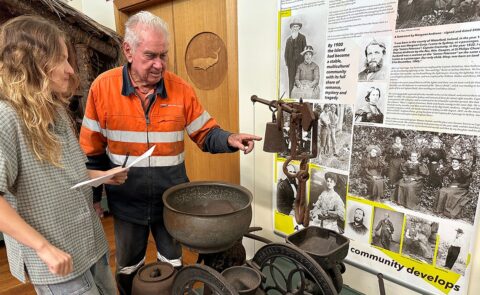
Ian donated this to the Lord Howe Island Museum collection and the item is on the web-based museum artefact system eHive.
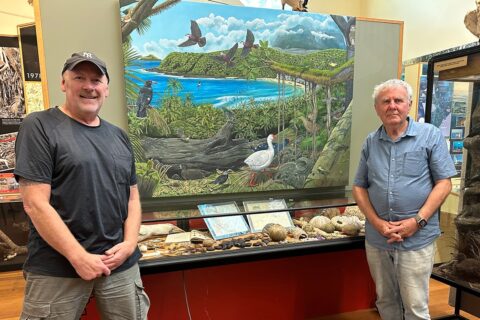
Ian Sinclair, finding the bottle buried in a sand dune at North Bay